Ignoring a “No Trespassing” sign might seem like a minor decision, but Pennsylvania law treats entering posted private property as a genuine criminal offense. Yes, it is illegal to trespass on posted private property in Pennsylvania. State law specifically recognizes properly posted signage as a legal form of notice, meaning a person who enters land after seeing such signs can face criminal charges even without any direct verbal warning from the property owner.
The Statute: 18 Pa.C.S. § 3503
Pennsylvania’s trespassing law is codified at Title 18, Section 3503 of the Pennsylvania Consolidated Statutes, “Criminal trespass.” The statute distinguishes between several categories of trespass, most notably defiant trespass, which applies when a person knowingly enters or remains on property despite being given notice that entry is forbidden.
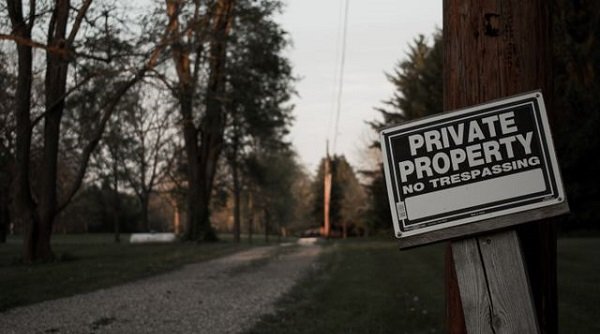
Posted Signs Count as Legal Notice
Under Section 3503(b), notice against trespass can be established in several distinct ways, and posted signage is one of the most common. The law specifies that notice can be given through direct communication to the person, through signs posted in a manner reasonably likely to come to the attention of intruders, through fencing or other enclosures clearly designed to exclude intruders, or through purple paint markings meeting specific legal requirements. These purple paint markings must consist of vertical lines at least eight inches long and one inch wide, placed between three and five feet above the ground, spaced no more than 100 feet apart, and are not a valid method of notice in Pennsylvania’s most populous counties. Once any of these forms of notice has been properly established, a person who enters the property anyway, knowing they lack permission to be there, commits defiant trespass.
How Defiant Trespass Is Graded
Generally, defiant trespass is treated as a summary offense, the lowest level of criminal offense in Pennsylvania. However, the grading escalates significantly if the person ignores a direct order to leave after already being on the property, in which case the offense becomes a third-degree misdemeanor punishable by up to one year in prison and a fine of up to $2,500. If a person ignores an official order to leave school grounds specifically, the charge can rise even further to a first-degree misdemeanor.
Agricultural and Open Land Trespass
Pennsylvania law includes a related but distinct provision covering agricultural and other open lands, which is especially relevant for hunters and rural landowners. Entering or remaining on agricultural or open land that has been properly posted, or is fenced or enclosed to exclude trespassers, is graded as a third-degree misdemeanor, punishable by up to one year in prison and a fine of at least $250. If the person instead defies a personal order to leave or not enter that was directly communicated by the landowner, the offense escalates to a second-degree misdemeanor, punishable by up to two years in prison and a fine between $500 and $5,000.
Simple Trespass vs. Defiant Trespass
It’s worth distinguishing defiant trespass from simple trespass, a separate and lesser offense under Section 3503(b.1). Simple trespass applies when a person enters or remains somewhere they know they aren’t permitted to be, but does not require any prior notice from the property owner, such as posted signs. This makes simple trespass a summary offense reserved for situations where a person’s knowledge of their lack of permission is clear from context alone, without a formal warning.
Trespass Involving Buildings Is More Serious
It’s also worth noting that trespass involving actual buildings or occupied structures, rather than open land, is graded far more severely under Section 3503(a). Depending on whether the person snuck in or actually broke in, this type of trespass can be charged as a second or third-degree felony, carrying penalties of up to ten years in prison and fines as high as $25,000.
Bottom Line
Properly posted signage is a legally recognized way for Pennsylvania property owners to establish criminal trespass liability, and ignoring such signs can result in real criminal consequences ranging from a summary offense to a serious misdemeanor. Anyone facing a trespassing charge should consult a licensed Pennsylvania criminal defense attorney to understand their specific situation.