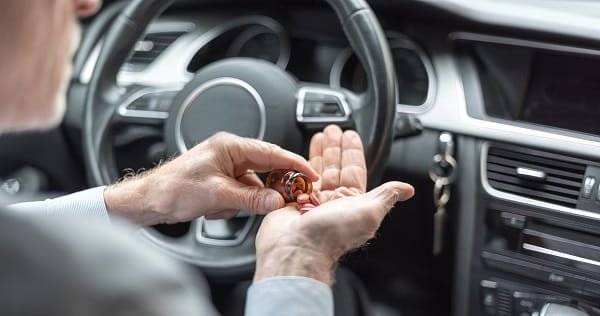
Having a valid prescription is often assumed to be a legal shield against DUI charges, but that assumption can lead drivers into serious trouble. Yes, it is illegal to drive under the influence of prescription drugs in Pennsylvania if those drugs impair a person’s ability to safely operate a vehicle, even when the medication was legally prescribed. Pennsylvania’s DUI law makes no meaningful distinction between illegal narcotics and legally prescribed medication when impairment is involved.
The Statute: 75 Pa.C.S. § 3802
Pennsylvania’s DUI law appears at Title 75, Section 3802 of the Pennsylvania Consolidated Statutes. It covers alcohol, controlled substances, and any combination of drugs that impairs a driver’s ability to safely operate a vehicle. Subsection (d) specifically addresses drugged driving and creates two distinct legal standards.
Two Standards Under Section 3802(d)
Zero-tolerance standard, § 3802(d)(1): This makes it illegal to drive with any measurable amount of a Schedule I controlled substance, or a Schedule II or III substance that has not been medically prescribed for that individual. Because non-prescribed Schedule II or III substances are being used unlawfully, this functions almost as a strict liability standard. Finding such a substance in a driver’s blood within two hours of driving is presumed to indicate impairment.
Impairment-based standard, § 3802(d)(2): This is the provision most relevant to legally prescribed medication. It applies when a driver is under the influence of a drug “to a degree which impairs the individual’s ability to safely drive.” This standard applies regardless of whether the drug was legally obtained. A person taking medication exactly as directed by a physician can still be charged if that medication impairs their driving.
Medications That Commonly Lead to Charges
Many prescribed medications carry warnings about drowsiness or impaired coordination, and any of these can support a DUI charge if a person drives while affected. Common examples include opioid painkillers like OxyContin and hydrocodone; sedatives such as Xanax and Ativan; sleep aids like Ambien; and stimulants including Adderall and Ritalin. A useful rule of thumb: warning labels stating a drug “may cause drowsiness” or “may impair your ability to drive” signal real DUI risk.
How Impairment Is Proven
Because holding a valid prescription is not a defense to impairment-based charges, prosecutors typically build their case using several types of evidence. This can include an officer’s observations at the scene, standardized field sobriety tests, blood or urine testing confirming the presence of a substance, and evaluations by trained Drug Recognition Experts. Unlike alcohol cases, which rely heavily on blood alcohol concentration, drug impairment cases often require more subjective evidence, since drug levels don’t always correlate neatly with the degree of impairment a person experiences.
Penalties for a Conviction
The consequences of a prescription drug DUI conviction can be severe. Individuals convicted under the drug-related provisions of Section 3802 often face some of the harshest mandatory minimum penalties in Pennsylvania’s DUI grading system, comparable to those for a “highest BAC” alcohol DUI of .16% or above. This can include mandatory jail time, license suspension, significant fines, and a lasting criminal record that can affect employment and other opportunities.
What Drivers Should Know
Physicians are generally not required to warn patients about DUI liability, so the responsibility falls on drivers themselves to understand how their medication affects them before getting behind the wheel. Anyone prescribed medication with impairment warnings should speak with their doctor or pharmacist about safe timing and driving restrictions.
Bottom Line
Taking medication exactly as prescribed does not protect a Pennsylvania driver from DUI charges if that medication impairs safe driving. Anyone facing a prescription drug DUI charge, or uncertain about how their medication affects their legal driving status, should consult a licensed Pennsylvania criminal defense attorney.