Crossing the street outside of a marked crosswalk is such a common habit that many people don’t think of it as breaking the law at all. Yes, it is illegal to jaywalk under Pennsylvania law, though the term “jaywalking” itself doesn’t actually appear anywhere in the state’s statutes. Instead, Pennsylvania regulates the underlying conduct through a set of specific pedestrian rules found in its Vehicle Code, and violating those rules can result in a citation and fine.
No Statutory Definition, But Real Rules
Pennsylvania’s Vehicle Code does not use or define the word “jaywalking.” Instead, what most people think of as jaywalking, crossing a street outside of a designated crosswalk, is governed by a handful of specific statutory provisions found in Title 75 of the Pennsylvania Consolidated Statutes. To determine whether a particular act of street-crossing is illegal, Pennsylvania law requires looking at the specific circumstances: where the pedestrian crossed, whether traffic signals were present, and whether the crossing occurred in an urban area with controlled intersections.
The Core Statute: 75 Pa.C.S. § 3543
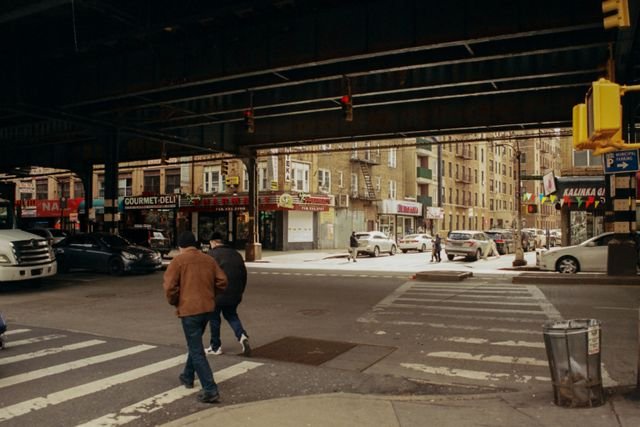
The primary law addressing crossing outside of crosswalks is Section 3543, “Pedestrians crossing at other than crosswalks.” Under this statute, a pedestrian crossing a roadway at any point other than a marked or unmarked crosswalk must yield the right-of-way to all vehicles on the roadway. This is a significant shift in responsibility compared to crossing within a crosswalk, where drivers generally must yield to pedestrians. When crossing mid-block or outside a designated crossing point, the legal burden falls on the pedestrian to ensure it is safe to do so.
Additional Restrictions in Urban Areas
Section 3543 goes further for urban environments. Between adjacent intersections in urban districts where traffic-control signals are in operation, pedestrians are prohibited from crossing anywhere except in a marked crosswalk. This means that in a typical city block with signalized intersections at both ends, crossing mid-block, even if no vehicles are nearby, is a violation of this specific provision, regardless of how safe the crossing might seem.
Diagonal Crossing Is Also Restricted
The same statute addresses another common pedestrian habit: cutting diagonally across an intersection to save time. Under Section 3543(d), no pedestrian may cross a roadway intersection diagonally unless authorized by official traffic-control devices or directed to do so by a police officer or another person authorized to control traffic. When diagonal crossing is permitted, pedestrians must still follow the specific signal governing that crossing movement.
Crosswalk Rights Aren’t Absolute Either
It’s worth noting that even pedestrians who do use a proper crosswalk don’t have unconditional right-of-way. Under Section 3542, drivers generally must yield to pedestrians crossing within marked or unmarked crosswalks at intersections. However, this protection has limits: a pedestrian cannot suddenly leave a curb and step into the path of an oncoming vehicle that has no reasonable ability to stop in time. Pedestrian right-of-way in a crosswalk also does not apply under the specific mid-block conditions addressed separately in Section 3543.
Penalties for Violations
Violations of Pennsylvania’s pedestrian crossing rules are generally treated as summary offenses, the lowest tier of criminal offense in the state, and typically result in a modest fine rather than any jail time. For comparison, a driver who fails to yield to a pedestrian in a proper crosswalk under Section 3542 faces a $50 fine upon conviction, illustrating the relatively minor financial penalty structure Pennsylvania applies to these pedestrian-related traffic offenses generally.
Why It Still Matters
While the fines involved are relatively small, violating these crossing rules can carry consequences well beyond the citation itself. If a pedestrian is struck by a vehicle while crossing outside of a crosswalk or against a signal, insurance companies and courts may point to that violation as evidence of comparative fault, which can significantly reduce any compensation the pedestrian might otherwise be entitled to in a personal injury claim.
Bottom Line
Although Pennsylvania law never uses the word “jaywalking,” the underlying conduct is regulated through specific, enforceable statutes governing where and how pedestrians may cross the street. Anyone with questions about pedestrian rights following an accident should consult a licensed Pennsylvania attorney.