Many couples live together for years without obtaining a marriage license, which can create confusion about whether they are legally married. No, it is not illegal to have an “unregistered” common-law marriage in Pennsylvania, but the law generally does not recognize common-law marriages created after January 1, 2005. A relationship that was legally established before that cutoff may still be recognized, even if the couple does not have a traditional marriage certificate.
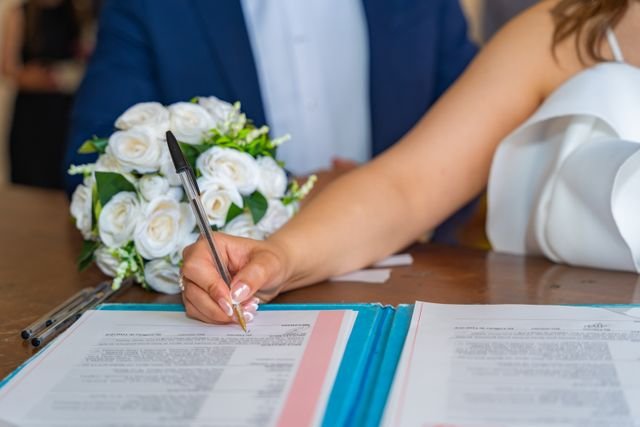
Pennsylvania No Longer Allows New Common-Law Marriages
Pennsylvania law provides that no common-law marriage contracted after January 1, 2005, is valid. The statute also preserves common-law marriages that were otherwise lawful and contracted on or before that date.
This means that simply living together today does not create a new common-law marriage in Pennsylvania. Couples generally do not become legally married merely because they have shared a home for many years, combined finances, raised children, or told friends and family that they are spouses.
A couple seeking to marry today generally must follow Pennsylvania’s formal marriage requirements.
What Does “Unregistered” Common-Law Marriage Mean?
The phrase “unregistered common-law marriage” is not technically the same as an ordinary marriage that was simply forgotten or not recorded. A common-law marriage, if legally valid under the law applicable at the time it was created, could exist without the same traditional ceremony and marriage-license process used for a formal marriage.
Therefore, the lack of a traditional marriage certificate does not automatically prove that no marriage existed. However, a person claiming an old common-law marriage may need to prove that the legal requirements were satisfied before Pennsylvania ended the creation of new common-law marriages.
How Can an Older Common-Law Marriage Be Proven?
Evidence of a claimed common-law marriage may include statements showing that the parties intended to be married, documents identifying them as spouses, tax or insurance records, financial documents, and evidence of how they represented their relationship to the community.
The length of the relationship alone is generally not enough. Living together for 20 years, for example, does not automatically create a valid Pennsylvania common-law marriage if the relationship began after the statutory cutoff.
The date and the parties’ intent can therefore be extremely important.
Is Living Together Without Marriage Illegal?
No. Adults may generally live together in Pennsylvania without being legally married. Cohabitation itself is not a crime, and a couple does not generally need to register its relationship with the government simply because the couple shares a residence.
The issue is not whether the couple is allowed to live together. The issue is whether the couple has legal marital status and can claim rights associated with marriage.
For example, a couple that began living together after January 1, 2005 generally cannot claim that a legal common-law marriage automatically arose solely because of long-term cohabitation.
What Happens If the Couple Separates?
If a valid common-law marriage was created before Pennsylvania abolished new common-law marriages, separation may not automatically end the marriage. The parties may need a divorce or another legal proceeding to resolve issues involving marital property, support, or other legal rights.
This can be especially important when one person claims rights as a spouse after the other person’s death or when the couple owns significant property together.
A person should therefore not assume that the absence of a marriage certificate automatically means there is no possible marital relationship.
Can a Person Claim to Be Married Without a Certificate?
Potentially, if the person can establish that a valid common-law marriage existed under the applicable law. However, falsely claiming to be married to obtain money, benefits, insurance, property, or another legal advantage could create separate legal problems depending on the circumstances.
The key distinction is between a genuine dispute about whether an old common-law marriage existed and an intentional false statement made to obtain an improper benefit.
What If One Person Wants the Relationship Declared Invalid?
Pennsylvania law provides procedures for addressing alleged void or voidable marriages, including certain purported common-law marriages. A court may be asked to determine the legal status of a claimed marriage when the issue affects the parties’ rights.
This may become important in disputes involving inheritance, property, support, or divorce.
The Bottom Line
No, it is not illegal to have an “unregistered” common-law marriage in Pennsylvania. However, Pennsylvania generally does not recognize a common-law marriage contracted after January 1, 2005. Living together, sharing expenses, raising children, or using the same surname does not automatically create a new legal marriage today.
A relationship that was validly established as a common-law marriage before the cutoff may still be legally recognized, even without a traditional marriage certificate. Because determining marital status can affect property, inheritance, support, and divorce rights, anyone claiming an older Pennsylvania common-law marriage should consult a qualified Pennsylvania family-law attorney.